What Role Does an Audio Isolation Transformer Play in a Sound System?
In the process of building professional sound systems and debugging high-fidelity audio equipment, the audio isolation transformer is often regarded as a key component for solving background noise, ground loop interference, and signal matching issues. As an organization deeply engaged in the field of audio transformers, Zhixiangyuan Electronics has accumulated extensive experience in the practical application of isolation transformers while serving clients in recording studios, stage sound reinforcement, and broadcast-grade equipment over the long term. This article will systematically outline the core functions of audio isolation transformers in sound systems from both electrical principles and auditory performance perspectives, helping audio engineers and audiophiles establish a clear technical understanding.
An audio isolation transformer is not an "audio enhancement accessory" but rather a signal-chain component with clear engineering value. Its essence lies in achieving electrical isolation through electromagnetic coupling, thereby breaking physical ground loops while simultaneously performing impedance transformation and common-mode noise suppression. Understanding its operating mechanism is a prerequisite for correct usage and optimal performance.
1. Breaking Ground Loops to Eliminate AC Hum and Noise
In complex sound systems, when multiple devices (such as mixing consoles, effects processors, amplifiers, and computer audio interfaces) are interconnected via shielded cables, slight differences in ground potential often exist between devices. When these devices are connected through signal cables and simultaneously connected to the mains earth, a closed ground loop is formed. The mains-frequency current (50Hz/60Hz) in the ground loop couples into the signal path, ultimately manifesting as a persistent low-frequency buzz or "hum" in the speakers, which in severe cases can even damage tweeters.
An audio isolation transformer is connected in series in the signal path, with its primary and secondary windings coupled only through the magnetic core, with no direct electrical connection. This effectively inserts a "DC isolation barrier" into the signal chain, physically cutting off the current path of the ground loop. According to test data from Zhixiangyuan Electronics in multiple field projects, before using an isolation transformer, the system's background noise level typically measures around -60dBV (including 50Hz mains interference); after connecting a professional-grade audio isolation transformer, the background noise can be effectively reduced by 20-30dB, with significant attenuation of the 50Hz component and its harmonics. This improvement is objective and measurable, not subjective auditory pseudoscience.
2. Suppressing Common-Mode Noise to Enhance Signal Purity
In real-world operating environments, electromagnetic interference from the surroundings (such as mobile phone signals, power supply switching transients, and dimmer interference) superimposes onto signal lines in common-mode form. Common-mode noise refers to interference voltages that appear simultaneously and in the same direction on both signal lines relative to ground. While ordinary differential amplifier circuits have some ability to reject common-mode signals (CMRR), their suppression capability degrades noticeably when the interference frequency is high or the amplitude is large.
An audio isolation transformer leverages the extremely low inter-winding distributed capacitance (typically only a few pF to tens of pF) to present a high-impedance path to high-frequency common-mode interference, effectively blocking its transmission to the secondary side. Compared with active differential amplifiers, isolation transformers provide flatter and more stable common-mode rejection characteristics across a wide frequency band (20Hz-20kHz or even higher), without requiring power supply or introducing additional noise from active components. In scenarios with extremely high reliability requirements, such as broadcast live streaming and medical device audio monitoring, audio isolation transformers remain the preferred solution due to their passive nature and absence of active-device distortion.
3. Achieving Impedance Matching and Level Adaptation
Different audio devices have different optimal transmission impedances. For example, professional microphones typically output low impedance (150-200Ω), while some vintage effects processors or direct instrument inputs may require high impedance (1MΩ) to ensure a flat frequency response. Impedance mismatch can lead to signal reflection, high-frequency attenuation, and dynamic range compression.
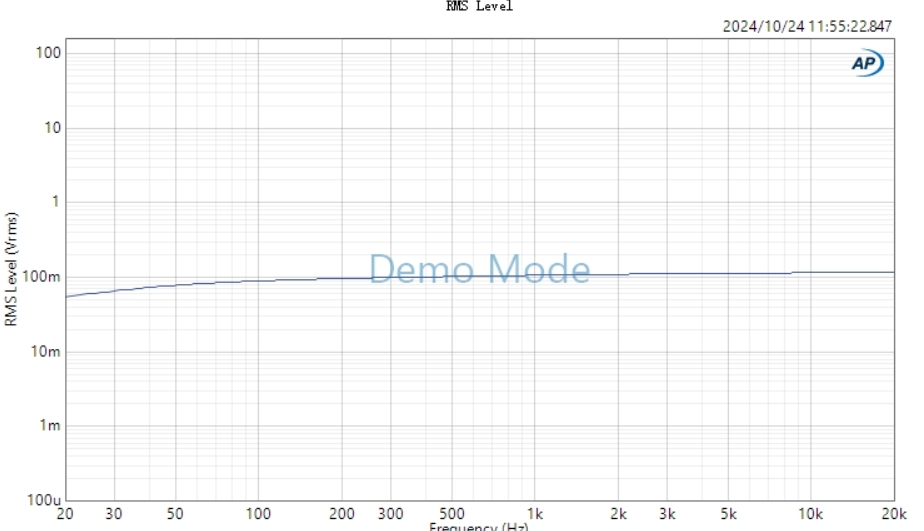
An audio isolation transformer can achieve precise impedance transformation by altering the turns ratio between the primary and secondary windings. For instance, a 10:1 transformer can transform a 600Ω source impedance to 60Ω, enabling better driving of long cable runs (low-impedance transmission offers stronger anti-interference capability). The broadcast-grade audio isolation transformers produced by Zhixiangyuan Electronics maintain impedance transformation accuracy within ±1%, with frequency response deviation not exceeding ±0.2dB across the 20Hz-20kHz range, meeting the flexible adaptation needs from microphone level (approximately -60dBu) to line level (+4dBu). This passive matching approach does not consume dynamic headroom and avoids the transient intermodulation distortion that active buffer circuits may introduce.
4. Protecting Downstream Equipment from DC Drift Damage
Between power amplifiers and speakers, or between tube preamps and power amps, if a fault in the preceding circuit causes DC voltage leakage, the DC component will directly enter the downstream stage, potentially causing sound distortion and voice coil displacement in mild cases, or burning out amplifier transistors or speaker voice coils in severe cases. The DC isolation characteristic of an audio isolation transformer (especially output transformers or speaker isolation transformers) effectively blocks any DC component while allowing only AC audio signals to pass through.
This protective function is particularly important in professional touring and rental equipment. Due to frequent transportation and plugging/unplugging, the risk of DC leakage caused by poor connector contact or internal component aging increases significantly. Connecting a high-power audio isolation transformer in series at the amplifier output acts as an additional "fuse" for expensive speaker systems, and this protection does not cause audible degradation of the audio signal. It should be noted that isolation transformers used in speaker lines must have sufficient power handling capacity (ranging from 50W to 500W depending on the application), and their core material and winding techniques directly affect saturation distortion performance under large signals.
5. Correlation Between Subjective Sound Quality Improvements and Objective Metrics
Many audio enthusiasts report that after adding a high-quality audio isolation transformer between the source and amplifier, the sound has a "darker background," clearer soundstage imaging, and reduced high-frequency harshness. These subjective listening improvements are not unfounded. From a technical perspective, when ground loop interference and common-mode noise are effectively suppressed, the signal-to-noise ratio of the audio signal improves, allowing subtle detail signals (such as reverb tails and instrument harmonics) to no longer be masked beneath the noise floor. As a result, listeners perceive richer detail and a more realistic sense of space.
Additionally, if the isolation transformer itself uses high-permeability silicon steel or amorphous alloy cores, combined with a well-designed shielding structure, the distortion it introduces is extremely low. For example, the audio isolation transformers from Zhixiangyuan Electronics, featuring a double-layer Mu-metal shielding structure, achieve total harmonic distortion (THD) below 0.005% and intermodulation distortion (IMD) below 0.01% under test conditions of 1kHz and +4dBu. This low-distortion characteristic ensures signal "transparency" during transmission, meaning the transformer only performs isolation and matching functions without adding its own "sonic coloration."
6. Engineering Recommendations for Proper Selection and Use
Not every audio chain requires the addition of an isolation transformer; incorrect usage may introduce unnecessary insertion loss or frequency response degradation. In practical engineering, the following principles are recommended:
- Identify the root cause: First use the "ground disconnection test method" or "stage-by-stage disconnection method" to confirm whether the noise originates from a ground loop. If the noise disappears after disconnecting a device's ground, that location requires isolation.
- Focus on transformer quality: Choose well-known brands or custom products with complete technical specifications (such as those from Zhixiangyuan Electronics), paying particular attention to frequency response range, distortion figures, maximum level handling capability, and shielding effectiveness.
- Pay attention to installation location: The isolation transformer should be placed as close as possible to the signal source end (such as the microphone output) or the noise-sensitive end (such as the mixer input), and connection cables should be kept as short as possible to avoid introducing new antenna effects.
- Balanced and unbalanced conversion: When interconnecting consumer-grade equipment (RCA unbalanced) with professional equipment (XLR balanced), use an isolation transformer with balanced-to-unbalanced conversion functionality to simultaneously address level matching and noise suppression.
7. Conclusion: A Rational View of the Value of Isolation Transformers
The role of an audio isolation transformer in a sound system can be summarized in sixteen characters: "isolate interference, match impedance, protect equipment, and restore signal." It is not a "seasoning" for improving sound quality but rather a fundamental engineering component for ensuring signal integrity. For professional audio systems pursuing high signal-to-noise ratios and high reliability, the proper deployment of audio isolation transformers is an indispensable part of system design.
As an organization long dedicated to the research, development, and manufacturing of audio magnetic components, Zhixiangyuan Electronics consistently serves the audio industry with rigorous test data and stable product quality. We recommend that audio engineers incorporate isolation solutions into the system design phase rather than reactively remedying noise issues after they arise. For specific transformer selection parameters in particular application scenarios, please refer to the Application Guide for Isolation Transformers in Audio Systems (a common industry technical reference) and the publicly available product technical white papers from our organization.
This article is compiled based on general technical principles in the audio engineering field and our organization's practical engineering experience, for reference only. For specific equipment parameters or industry standards, please refer to the latest official notices or the original manufacturer's technical manuals.
— Technical Department, Zhixiangyuan Electronics