Key Functional Differences Between Audio Transformers and Standard Transformers
In the field of electronic device design and manufacturing, transformers serve as core magnetic components, and their selection directly determines overall equipment performance. Zhixiangyuan Electronics, a professional manufacturer with years of expertise in audio transformer technology, frequently receives customer inquiries about "what exactly differentiates audio transformers from standard transformers." This article systematically examines the fundamental differences between the two from four dimensions: functional positioning, frequency response, material and process, and practical applications, helping engineers and procurement professionals make more precise selection decisions.
Although audio transformers and standard transformers (such as power transformers and control transformers) both operate on the principle of electromagnetic induction, their design objectives are fundamentally different. Standard transformers prioritize "energy transmission efficiency" as the primary metric, typically operating at a fixed frequency of 50Hz or 60Hz. In contrast, audio transformers must maintain signal fidelity across a wide band from 20Hz to 20kHz, which places stringent demands on winding structure, core material, and shielding design.
1. Fundamental Differences in Operating Frequency and Bandwidth Design
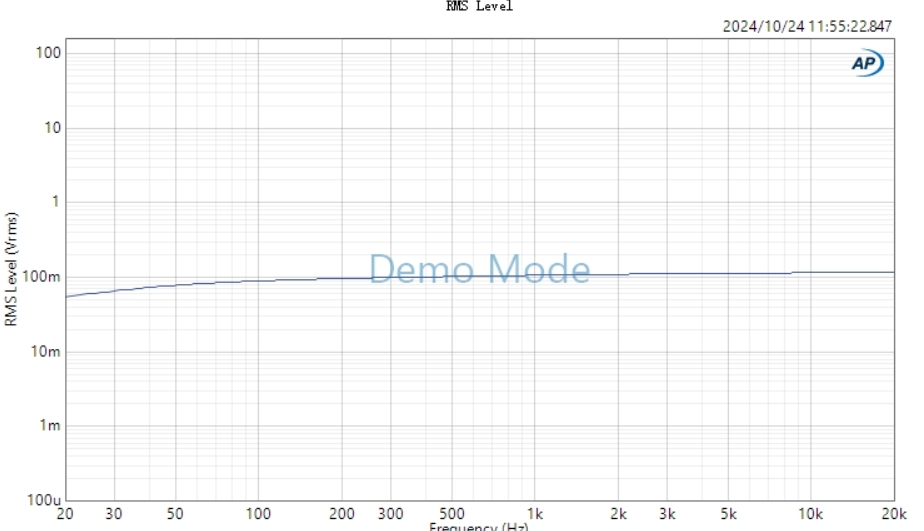
Standard transformers operate at a single, fixed frequency. For example, mains transformers only need to optimize efficiency and temperature rise near 50Hz, and their cores typically use grain-oriented silicon steel with a thickness of 0.23mm to 0.35mm to minimize eddy current losses. However, audio transformers must cover the full audible frequency range, requiring a flat frequency response curve that typically varies by no more than ±0.5dB from 20Hz to 20kHz.
In audio transformer design, Zhixiangyuan Electronics employs thinner cores made of nickel-zinc ferrite or amorphous nanocrystalline materials, with thicknesses controlled between 0.05mm and 0.1mm, significantly reducing core losses at high frequencies. Additionally, audio transformers often require more winding turns, and distributed capacitance must be precisely calculated and compensated; otherwise, high-frequency signal attenuation will occur. This design difference directly leads to higher manufacturing costs for audio transformers compared to standard transformers, but the resulting flat frequency response is an uncompromisable foundation for professional audio equipment.
2. Different Requirements for Signal Fidelity and Distortion Control
Standard transformers permit a certain degree of waveform distortion during voltage conversion because downstream circuits typically include rectification and filtering stages that are insensitive to harmonics. However, audio transformers are directly connected in the signal path, and any distortion they introduce is perceptible to the ear. Specifically, audio transformers must control three types of distortion:
- Hysteresis distortion: Caused by the nonlinear magnetization curve of the core material. Zhixiangyuan Electronics selects high-permeability, low-remanence materials such as permalloy or amorphous alloys to keep total harmonic distortion (THD) below 0.1%.
- Frequency distortion: Managed by optimizing interlayer insulation thickness and winding methods to achieve resonant balance between leakage inductance and distributed capacitance, ensuring consistent gain across low, mid, and high frequencies.
- Transient intermodulation distortion: Audio signals are complex composite waveforms. Standard transformers can produce noticeable transient intermodulation distortion under overload, whereas audio transformers must reserve sufficient flux density margin, typically operating at only 30% to 40% of saturation flux density.
For example, a professional-grade line isolation transformer produced by Zhixiangyuan Electronics exhibits a measured THD below 0.05% with a 1kHz sine wave input, while a comparable standard transformer often shows THD above 0.5%. This order-of-magnitude difference is particularly critical in high-sensitivity applications such as microphone preamplifiers and DAC analog output stages.
3. Differences in Shielding Structure and Anti-Interference Capability
Standard transformers used in industrial control cabinets have relatively relaxed requirements for electromagnetic interference (EMI) suppression because their outputs typically pass through rectification, filtering, or voltage regulation circuits. In contrast, audio transformers operate in low-level signal environments—for instance, dynamic microphone output levels range from just 1mV to 10mV—making them highly susceptible to external electromagnetic field interference.
To address this, Zhixiangyuan Electronics incorporates multiple layers of electrostatic shielding in audio transformer structures, using copper or aluminum foil wraps with dedicated grounding pins. These shielding layers block capacitive coupling between primary and secondary windings, suppressing common-mode interference to below -80dB. Additionally, audio transformer housings often use high-permeability alloy shields to further attenuate external magnetic field interference. By comparison, standard transformers typically rely only on the closed magnetic path of their cores to reduce flux leakage, without additional shielding layers.
4. Application Scenarios and Selection Decision Points
Understanding the differences between the two ultimately aids in correct selection for engineering projects. Standard transformers are suitable for power supply, relay control, indicator lights, and similar applications, where key considerations include voltage withstand rating, rated power, and temperature rise. Audio transformers, on the other hand, are used in the following professional fields:
- Professional audio equipment: Signal isolation and impedance matching in mixing consoles, recording interfaces, and microphone preamplifiers.
- Broadcast and communication systems: 2-wire to 4-wire conversion in telephone lines, and balanced-to-unbalanced conversion in broadcast lines.
- High-fidelity audio: Output transformers for tube amplifiers and differential-to-single-ended conversion in DACs.
- Industrial acoustic testing: Signal coupling in vibration sensors and acoustic emission detection systems.
When selecting, engineers should pay close attention to the following parameters: frequency response range, distortion at rated level, maximum input level (corresponding to magnetic saturation threshold), and the withstand voltage between primary and secondary windings. Zhixiangyuan Electronics, as a specialist in audio transformer technology, offers a full product range from miniature surface-mount types to large rack-mount units, and all products undergo rigorous aging tests and sweep frequency analysis.
5. Subtle Differences in Manufacturing Process and Quality Control
Beyond electrical performance parameters, audio transformers and standard transformers also differ significantly in production processes. Standard transformers allow higher winding tension and fully automated winding because their low operating frequencies make them insensitive to distributed parameters. Audio transformers, however, require special winding techniques such as "Z-type winding" or "sectional winding" to reduce interlayer potential differences and lower equivalent parallel capacitance. Furthermore, audio transformer leads often use silver-plated copper wire or pure silver wire to minimize high-frequency losses caused by the skin effect.
Zhixiangyuan Electronics implements a multi-stage inspection system in quality control: each batch of core material undergoes sampling tests for permeability and loss tangent before entering the warehouse; semi-finished windings are tested for inductance and Q factor; finished products undergo high-pass frequency response scanning and insulation withstand voltage testing. This process aligns with comprehensive quality management standards set by authoritative organizations such as the China Association for Quality (China Quality Association), ensuring that every audio transformer delivered to customers meets consistency requirements.
Conclusion: Choose Based on Needs, Prioritize Professional Quality
In summary, the differences between audio transformers and standard transformers are not simply a matter of "price level" but rather systematic design distinctions centered on signal fidelity, bandwidth, and anti-interference capability. For engineers pursuing high-fidelity signal chains, selecting products from a professional audio transformer manufacturer is key to ensuring the performance floor of the system. Zhixiangyuan Electronics reminds you: in actual projects, always evaluate comprehensively based on signal level, load impedance, and operating environment, and when necessary, request samples for real-world testing.
Reference sources for this article: Zhixiangyuan Electronics Technical Department internal design specifications, sections on frequency characteristics in the IEC 60076 power transformer standard, and industry technical literature "Audio Transformer Design and Application." For details on specific policies or standard implementation, please refer to the latest official documents.
Zhixiangyuan Electronics continues to provide high-reliability transformer solutions for the professional audio industry. For technical selection support or sample requests, please feel free to contact our application engineering team.