What Are the Structural Differences Between EE and EI Audio Transformers
As key components in audio equipment, communication devices, and industrial control circuits, the core structure of audio transformers directly determines their electrical performance and application scenarios. In the field of audio transformer manufacturing, EE-type and EI-type are the two most mainstream core configurations. Although similar in appearance, they differ significantly in magnetic circuit design, winding space, leakage inductance control, and cost management. As a professional manufacturer specializing in audio magnetic components for years, ZhiXiangYuan Electronics will analyze the core differences between EE and EI audio transformers from a structural perspective in this article, helping engineers make more precise decisions during component selection.
1. Basic Definitions and Visual Differences of Core Structures
EE-type audio transformers use a core made of two perfectly symmetrical E-shaped core halves joined together, giving the overall appearance of an "EE" shape. This structure does not include an additional I-shaped piece; the magnetic circuit closes directly through the center legs and side legs of the two E-shaped cores, forming a complete flux path. Since the two core halves are fully symmetrical, EE-type transformers require no orientation distinction during assembly, resulting in higher process consistency.
EI-type audio transformers, on the other hand, consist of one E-shaped core combined with one I-shaped bar core, presenting an "EI" appearance. The I-shaped piece serves as the closing part of the magnetic circuit, mating with the end face of the E-shaped core to form the flux path. This asymmetrical structure has been widely used in traditional power-frequency transformers and certain audio transformers, offering mature manufacturing processes and lower costs.
| Comparison Dimension | EE-Type Core | EI-Type Core |
|---|---|---|
| Component Composition | Two E-shaped cores joined together | One E-shaped core + one I-shaped core |
| Magnetic Circuit Symmetry | Fully symmetrical | Asymmetrical |
| Assembly Orientation | No orientation distinction required | E and I positions must be aligned |
2. Differences in Magnetic Circuit Structure: Symmetry and Air Gap Control
Magnetic circuit symmetry affects harmonic distortion. EE-type transformers feature a fully symmetrical magnetic circuit, with consistent reluctance in both the upper and lower core halves. As a result, when operating during positive and negative half-cycles of the signal, the flux distribution is uniform, leading to lower even-order harmonic distortion. This is particularly important for high-fidelity audio signal transmission, especially in push-pull amplifier circuits, where EE-type cores better suppress imbalance issues caused by DC magnetization.
Air gap control directly impacts inductance and frequency response. Due to the asymmetrical structure of EI-type transformers, tiny air gaps are prone to occur at the interface between the E and I pieces, and the gap size is significantly influenced by assembly pressure. In contrast, EE-type transformers, formed by two symmetrical core halves, offer more precise contact area on the center leg, allowing fine control of the air gap through grinding or shimming. For audio filter circuits requiring precise inductance, the EE-type structure enables more consistent production.
3. Differences in Winding Space: Window Area and Winding Convenience
EE-type cores provide a more generous winding window. Because the side legs of the two E-shaped cores open symmetrically, EE-type transformers typically have larger window height and width, allowing the use of thicker magnet wire or additional winding layers. For audio applications requiring multiple windings (primary, secondary, feedback) such as output transformers, the EE-type structure reduces winding difficulty and minimizes interlayer capacitance coupling effects.
EI-type cores have a relatively compact winding window. Since the I-shaped piece occupies part of the magnetic circuit space, the window size of EI-type transformers is slightly smaller than that of EE-type under the same external dimensions. This limits the wire diameter and number of turns, leaving less design margin for high-current or high-voltage isolation applications. However, in miniaturized or cost-sensitive audio coupling transformers, the compact window of EI-type actually helps reduce overall volume.
4. Differences in Leakage Inductance and Distributed Capacitance Performance
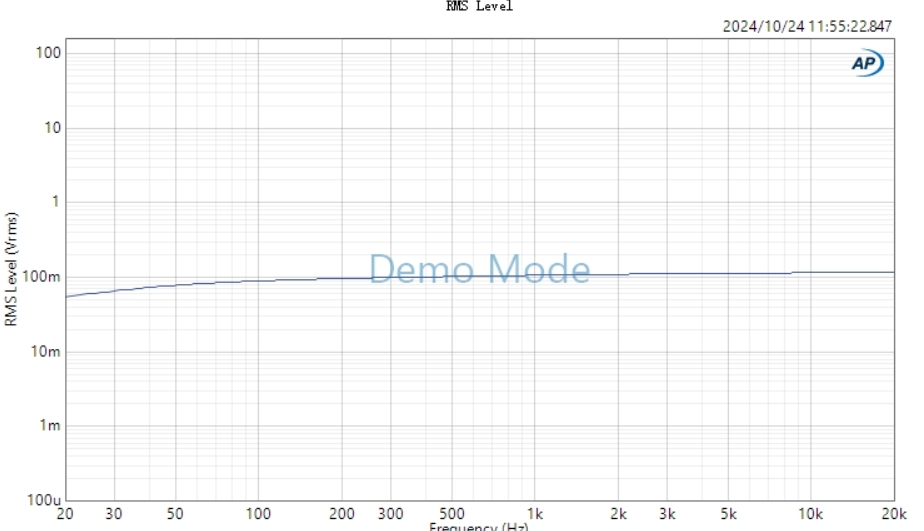
Leakage inductance is a key parameter for the high-frequency response of audio transformers. EE-type transformers, with their complete closed magnetic circuit and windings tightly wrapped around the center leg, have shorter leakage flux paths, resulting in lower leakage inductance values compared to EI-type transformers of the same specification. This means EE-type transformers exhibit flatter amplitude-frequency characteristics in the high-frequency range, making them suitable for broadband audio signal transmission (e.g., the full 20Hz~20kHz range).
EI-type transformers, due to the tiny gap at the interface between the I-shaped piece and the E-shaped core, have slightly higher leakage flux, causing earlier attenuation in high-frequency response. However, in certain audio devices, this characteristic is intentionally leveraged to create a "warm" or "soft" sound signature, which is why EI-type transformers remain widely used in guitar amplifiers, tube preamps, and similar equipment.
5. Cost and Manufacturing Process Comparison
In terms of raw material costs, the I-shaped piece of EI-type cores uses less material than the symmetrical EE-type structure, resulting in slightly lower material costs. From a manufacturing perspective, the lamination process for EI-type cores is simpler and well-suited for high-volume automated production, giving it an advantage in low-cost audio isolation transformers.
EE-type cores demand higher grinding precision and assembly alignment, leading to relatively higher process costs. However, EE-type transformers offer better consistency and reliability, especially in mass production, where the failure risk of EE-type structures is lower. For professional audio equipment pursuing long-term stability, EE-type transformers often deliver better overall cost-effectiveness.
6. Application Scenarios and Selection Recommendations
- EE-type audio transformers are better suited for: high-fidelity amplifier output stages, audio signal isolation, analog front ends of DA/AD converters, and instrumentation requiring low distortion and wide frequency response.
- EI-type audio transformers are better suited for: guitar effect pedals, tube equipment, cost-sensitive consumer audio products, and applications requiring specific tonal coloration.
In practical engineering selection, factors such as operating frequency range, power rating, and insulation withstand voltage requirements should also be considered. ZhiXiangYuan Electronics recommends that engineers weigh the pros and cons of both structures based on the overall design goals of the circuit—rather than a single parameter.
7. Conclusion
The choice between EE and EI audio transformers is not about absolute superiority or inferiority; the key lies in matching application requirements. EE-type excels with its symmetrical magnetic circuit and low leakage inductance, making it ideal for high-fidelity and precision signal processing applications. EI-type stands on mature processes and cost advantages, retaining irreplaceable value in tone shaping and consumer electronics. Understanding the structural differences between the two helps engineers optimize designs from a fundamental perspective.
ZhiXiangYuan Electronics has accumulated extensive experience in core selection and winding processes in the audio transformer field. Our manufacturing processes strictly adhere to industry-standard quality requirements, and we offer customized solutions based on customer-specified electrical parameters and structural requirements. If you have any questions regarding EE or EI audio transformer selection, feel free to contact the ZhiXiangYuan Electronics technical team for support.
Content reference basis: industry-standard core structure design principles for magnetic components, technical literature on audio transformer applications, and ZhiXiangYuan Electronics product design specifications. The structural comparisons mentioned in this article are based on publicly available fundamental electromagnetic principles; specific parameters should be verified through actual application testing.