5 Key Specifications for Audio Transformer Selection: A Practical Guide for Professional Engineers
In audio signal chains, transformers play a critical role in impedance matching, signal isolation, and common-mode rejection. The selection of a transformer directly impacts the system's signal-to-noise ratio, distortion levels, and overall sonic character. As a professional manufacturer specializing in audio transformers, Zhixiangyuan Electronics has accumulated extensive application experience through long-term service to professional audio equipment manufacturers. This article provides a practical engineering perspective on the 5 key specifications that cannot be overlooked when selecting audio transformers, helping designers avoid common pitfalls and make more reliable, system-appropriate decisions.
Specification 1: Impedance Matching — The Foundation of Signal Transfer Efficiency
Impedance matching is the foremost technical parameter to consider in audio transformer selection. The turns ratio between the primary and secondary windings determines the power transfer efficiency between the signal source and the load. When the source impedance equals the load impedance, power transfer is maximized and reflection losses are minimized. In practical engineering, standard ratios such as 600Ω:600Ω and 10kΩ:10kΩ are suitable for most line-level signal transmission scenarios, while microphone input transformers typically employ lower impedance ratios such as 150Ω:10kΩ or even lower.
It is important to note that impedance is not a fixed value; it varies with frequency. A high-quality transformer should maintain relatively stable impedance characteristics across the full audio band of 20Hz-20kHz, avoiding saturation at low frequencies or a sharp impedance rise at high frequencies due to leakage inductance. The engineering team at Zhixiangyuan Electronics recommends that selection should be based on the actual output impedance of the preceding stage and the input impedance of the following stage, rather than relying solely on nominal ratios. When necessary, impedance curves should be measured to verify the match.
Specification 2: Frequency Response — The Fidelity Benchmark for Audio Detail Reproduction
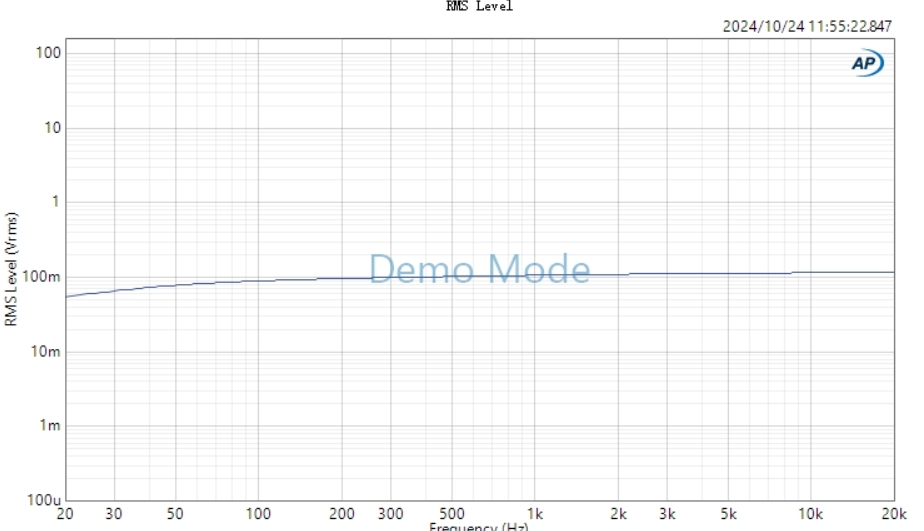
Frequency response directly reflects the gain consistency of a transformer across different frequency bands when passing audio signals. An ideal audio transformer should exhibit a flat response curve within the 20Hz-20kHz range, with deviation typically controlled within ±0.5dB. However, due to parasitic parameters such as core material permeability, winding distributed capacitance, and leakage inductance, the frequency response of transformers often shows varying degrees of attenuation at both high and low frequency extremes.
In practical selection, a wider frequency response is not always better; instead, the effective bandwidth requirements of the target application should be the focus. For example, output transformers used in guitar amplifiers may emphasize mid-band tonal coloration, while line transformers for recording studio monitoring systems pursue as neutral a frequency response as possible. Professional selection should reference the manufacturer's measured frequency response curves rather than relying solely on nominal bandwidth data. For demanding recording chains, it is recommended to choose high-precision models with fluctuation not exceeding ±0.2dB across the 20Hz-20kHz range, and to verify that the low-frequency -3dB point is below 10Hz to ensure extremely low-frequency signals are not attenuated.
Specification 3: Distortion Characteristics — The Core Parameter for Signal Purity
Total Harmonic Distortion (THD) is a key indicator for evaluating audio transformer quality. The nonlinear magnetization characteristics of the core material are the primary source of distortion, particularly under low-frequency, high-level signal conditions where the core is prone to entering saturation, resulting in significantly increased harmonic components. Professional-grade audio transformers should have THD below 0.1% at normal operating levels, with high-end models capable of achieving below 0.01%.
However, it is important to note that lower distortion is not always better in all operating conditions. In certain applications, such as channel isolation transformers in analog mixing consoles, a small amount of even-order harmonics is deliberately introduced to add a sense of "warmth" to the sound. Engineers should also pay attention to the transformer's rated operating level (typically specified in dBu) and the knee point of the distortion curve during selection, ensuring that distortion remains within acceptable limits at maximum expected signal levels. Additionally, different core materials (such as silicon steel, permalloy, and amorphous nanocrystalline) exhibit significantly different distortion characteristics. Permalloy cores offer superior linearity in the mid-to-low frequency range compared to standard silicon steel, albeit at a higher cost.
Specification 4: Isolation and Common-Mode Rejection — Ensuring System Immunity to Interference
One of the core advantages of audio transformers is their ability to provide electrical isolation, breaking ground loops and thereby achieving excellent common-mode rejection. In professional audio systems, interconnecting multiple devices readily forms ground loops, giving rise to 50Hz/60Hz hum interference. The isolation characteristics of transformers effectively block the conduction path of such low-frequency noise. Common-mode rejection ratio (CMRR) is typically expressed in dB, with high-quality products achieving CMRR above 100dB in the mid-frequency range.
In addition to the isolation voltage rating (commonly 500Vrms or higher), attention should also be paid to the inter-winding distributed capacitance during selection. Lower inter-turn capacitance helps maintain good common-mode rejection at high frequencies. Transformers with electrostatic shielding layers can further divert common-mode interference currents to ground, making them particularly suitable for noise-sensitive input stages such as microphone preamplifiers. It should be noted that the grounding strategy of the shield (single-ended grounding or floating) significantly affects actual performance, and the overall system grounding scheme should be considered holistically during design.
Specification 5: Construction and Workmanship — Hidden Factors Affecting Long-Term Reliability
The mechanical construction and manufacturing process of a transformer determine its stable performance in complex electromagnetic environments. In terms of shielding design, fully enclosed metal housings or permalloy shielding cans effectively suppress interference from external stray magnetic fields. In winding processes, sectionalized and segmented winding methods combined with appropriate tape insulation reduce distributed capacitance and leakage inductance. For compact devices with limited installation space, toroidal transformers offer lower stray flux and smaller footprints compared to EI-type transformers, albeit at a higher cost.
Furthermore, whether the termination type (PCB pins, flying leads, or screw terminals) is compatible with production assembly requirements, whether the operating temperature range covers the equipment's usage environment (typically -20℃ to +70℃), and whether the product complies with environmental regulations such as RoHS and REACH are all indispensable aspects of a comprehensive selection evaluation. Industry-standard reliability verification for transformers typically follows the IEC 60068 environmental testing standards for temperature cycling and humidity tests. Products with complete test reports demonstrate lower failure rates in long-term service.
Conclusion: Professional Selection Requires a Holistic System-Level Trade-off
Audio transformer selection is never a comparison of a single parameter but rather a multi-dimensional trade-off based on system requirements. The five key specifications discussed above — impedance matching, frequency response, distortion characteristics, isolation capability, and construction/workmanship — are interrelated and collectively determine the final sonic performance and system stability. Engineers are advised to finalize transformer selection early in the design phase and allocate sufficient time for testing and verification to avoid last-minute design revisions due to parameter mismatches.
Zhixiangyuan Electronics has long been dedicated to the R&D and manufacturing of audio transformers and inductive components, with products widely used in professional mixing consoles, microphone preamplifiers, audio interfaces, and broadcast-grade transmission equipment. We provide complete measured data reports for every transformer and conduct factory inspections in accordance with industry-standard testing specifications (such as GB/T 15290 for power transformers in electronic equipment), ensuring traceable performance and reliable quality. If you are currently seeking a suitable transformer solution for your audio project, we welcome you to provide your specific technical parameter requirements, and our application engineers will respond with selection recommendations within 24 hours.
Reference Basis: The transformer technical terminology and testing methods mentioned in this article refer to the relevant sections of the Electronic Transformer Handbook and the IEC 60268 standard for audio system equipment. Performance specification recommendations are derived from publicly available industry technical literature. Specific data not mentioned herein is subject to the latest official announcements and manufacturer measured data.